If you are worried that ChatGPT will out rank you in the search results, or losing work as a writer, then you likely aren’t a very good writer to begin with. But don’t worry, in this article I’ll show you 4 tactics to writing better content than ChatGPT.
It seems like almost everyone I know at the moment is talking about ChatGPT. A lot of people are fascinated at how the technology works, some are excited at the ability to create lots and lots of content very quickly, and others are afraid that it will replace them and disrupt their careers. SEOs are scared that this content will eventually out rank them within the search results, or even worse the search engines will utilize this technology instead of results at all. Content developers are scared because they see a future where this type of technology will replace them entirely or minimize their value.
To me it seems, if we are going to be competing against artificial intelligence, the only logical conclusion is that human beings must create better output than the AI. And, to be completely honest at the moment, that does not seem too difficult. Take for example this post that I posted several weeks ago. If you read just the first couple paragraphs you might notice that the entire blog post was written by ChatGPT. I provided several writing prompts and the rest of it was written entirely by ChatGPT.
The post itself is not horrible or inaccurate. However, to be completely honest, it’s not very good either. Some might consider it “good enough”, but it’s not a great piece of content, and this is where I think human beings have a real advantage over artificial intelligence. We have the ability to create content in a way that reflects the human experience that can be easily recognized as unique and authoritative in a way that an artificial intelligence algorithm cannot. Below are four recommendations for creating better content than artificial intelligence by simply doing the things that a computer cannot.
Discuss Unique Topics or Information
Large language models are a type of artificial intelligence that predict how a piece of text should be written based on the probability of how words are arranged within a corpus of documents. These types of algorithms require millions upon millions of pieces of content to understand the most likely combination of words to create accurate sounding sentences and paragraphs. But because of this it is easier for tools like ChatGPT to create content around common ideas or subjects that are discussed heavily. If I were to ask ChatGPT to provide a recipe for spaghetti sauce it likely would write a decent spaghetti sauce recipe from millions of different recipes on the internet.
However, if I asked ChatGPT something much more specific that has not been written about very much at all, it would likely have a much more difficult time developing good content around that topic. Therefore if you want to write better content than AI you should pick topics and information that are very specific and unique. Focusing on the things that you or your business are experts at is a good place to start providing very specific and exact details that are unique can help raise the bar above ChatGPT that would likely only create content that is very basic and probably understood as common knowledge by most in your category.
Have A Clear POD
Sometimes you might not have the option to create content around a completely unique topic. You may have to create content that many others have already written. In this case you should consider what will your Point Of Difference (POD) will be within your content. A point of difference is anything that you can add to your content that is unique from others within the same topic. To help define what your point of difference is you should do some research on other pieces of content on the same topic and look for any gaps or missing features in the content that could be added that are lacking. By providing unique information such as proprietary data or other elements to your content you will outperform artificial intelligence and others in your niche. Some examples of specific points of difference maybe a comparison of different data points, results from a survey that you conduct yourself, or information from your users in the form of user-generated content. Anything that you can add that would be impossible for others to replicate is ideal. This will not only help you compete against ChatGPT but also against others in your vertical.
Have an Opinion
Having an opinion is a uniquely human experience. Don’t believe me? Go into your kitchen and ask your toaster which it prefers more white bread or wheat? Or how about ask your dog which is better, taking naps or belly rubs? Hopefully you do not get an answer for either of these questions. If so then youv’e got a bigger problem than content creation to worry about. Opinions are a unique part of the human experience because they require uniquely human characteristics in order to develop. Things like experience, critical thinking skills, and taste all go into creating a person’s unique opinion around a topic or idea. Because of this, artificial intelligence cannot create an opinion or even claim to have one because they do not possess these human characteristics like you or I do. Utilizing a well-reasoned opinion that is backed up by experience from the writer as well as information that comes from research, can be a very powerful tactic to creating content that artificial intelligence cannot replicate.
Use a Unique Voice
The writing style I shoot for with these blog posts is typically a mix of informative, casual, and humorous (some of you are laughing, right??). However, when I write an SEO audit, or any sort of consulting materials, my writing style is much more straightforward, detail oriented, and professional. The difference between the two types can be characterized by having a unique voice. Writing with a unique voice engages with your reader on a personal level and distinguishes the content from others. Also using a unique voice can make the content seem more human as it often mimics real speech patterns that may be difficult for artificial intelligence to replicate. Some experienced writers have developed such a recognizable voice that their content can be easily distinguished without referencing who the author is. Take for example someone like David Sedaris who writes in a way that is remarkable enough to be uniquely his own voice. So much so that if you ever heard him dictate any of his passages you can almost hear his voice in your head when reading his books.
There are plenty of other tactics that one can use to write better content than ChatGPT. But the one similar characteristic among all of them is to be as human as possible and to include aspects of your writing that only a human can create. Because it doesn’t matter how advanced artificial intelligence algorithms get, there are still some things that only humans will be able to do, and if you want to be a good writer you’ll have to incorporate those things in each piece of writing that you create.
During the last several months of 2022 most of the internet has been captivated by a new artificial intelligence software called ChatGPT. While the technology is a breakthrough in artificial intelligence and automated content development it is also a complete game-changer for the world of digital marketing. This is especially the case for SEO where many are concerned that it could make their jobs obsolete and others are looking at the new artificial intelligence as a powerful tool to help automate and fine-tune their already existing processes. While it is still unclear what type of impact this new technology will have on the world we can see early on some of the main advantages digital marketers can utilize to make their jobs easier. In this blog post I’m going to detail 5 powerful ways to use this new technology to make your technical SEO work faster and more efficient.
Most modern Content Management Systems include the ability to create automated dynamic XML sitemaps that do not require the SEO to create on their own. However there are always instances where an SEO will come across a collection of static web pages or even content managed with a custom CMS that does not include a sitemap. In situations where this is the case the SEO may be required to generate their own static XML sitemap by hand. With ChatGPT we can make this process relatively easy by providing a list of URLs that should be included in the XML sitemap with some simple directions on what to do next.
Prompt:
Create a valid XML site map that includes the following URLs:
Ever since JSON-LD was first deployed in 2010 there have been thousands of different JSON-LD generators to help SEO develop this type of schema markup without coding anything at all. However these types of automated generators rely on our understanding of the types of schema required before any information is given. Now with ChatGPT a SEO only needs the required information about the web site or content to get started.
Prompt
Generate JSON-LD schema for a local restaurant named Chez Joe’s Gourmet Hotdogs at the address 1234 Frankfurter Street, Columbia SC 29201 with the phone number 803-555-3434.
Most websites never need to edit their robots.txt file. However most of the time when editing is required it takes an advanced understanding of robot directives in order to develop the right crawl and blocking rules. For example you may want to prevent crawlers from accessing certain directories and at the same time allow for accessing subdirectories inside the blocked original. When these types of advanced rules are required ChatGPT can help easily develop the right robots.txt directives to allow custom crawling and blocking rules.
Prompt
Create a robots.txt file that blocks Bing from crawling the /assets/ directory, but allows crawling the /assets/javascript/ directory.
There are plenty of automated SEO meta tag generators that can help generate the perfect meta robots tag. However in some instances it may be easier to simply tell ChatGPT exactly what you want in one command instead of selecting options through a list inside a tool.
Prompt
Create a robot’s meta tag that allows a page to be indexed, allows for links to be followed, but limits the number of characters in the text snippet to 46.
Setting up a proper 301 redirection is an almost required task for every SEO during the course of their career. There are plenty of ways to implement these types of redirections however utilizing an .htaccess file can allow for the redirection to come directly from the web server instead of a CMS or other outside utility. Using a .htaccess can carry some risk though as the directives are sometimes case sensitive and are prone to error. Such errors can cause site wide issues. Therefore when using custom .htaccess rules you should always test on a development server before deploying live. This is especially true for ChatGPT that relies on public information instead of testing live code.
Prompt
Create a htaccess rewrite rule that uses a 301 redirection to redirect /about.html to /about-us/
ChatGPT Response:
RewriteEngine On
RewriteRule ^about\.html$ /about-us/ [R=301,L]
Using ChatGPT to implement technical SEO tactics can be a quick way to implement SEO best practices and tactics. However it is critical that a base understanding of each of these tactics be utilized to ensure that the ChatGPT output is correct not only for the objective you’re trying to implement but also to mitigate the risk of errors.
A backlink audit is the process of reviewing the backlinks (also known as “inbound links”) that point to a website in order to determine their quality and relevance. This can be useful for identifying and addressing any potential issues with the backlinks, such as those that come from spammy or low-quality websites. A backlink audit can help to improve the overall quality of a website’s backlink profile, which can in turn improve its search engine rankings and the amount of traffic it receives from search engines.
How do I do a backlink audit?
Here are the steps for conducting a backlink audit:
Gather all of the backlinks pointing to your website by using a tool such as Ahrefs, SEMrush, or Moz.
Review each of the backlinks to determine their quality and relevance. This can involve looking at factors such as the relevance of the linking website to your own, the authority of the linking website, and the quality of the content on the linking website.
Identify any backlinks that are potentially harmful to your website’s search engine rankings, such as those that come from spammy or low-quality websites.
Disavow any harmful backlinks by using the Disavow tool provided by Google. This will tell Google not to take these backlinks into account when determining your website’s search engine rankings.
Monitor your backlink profile on an ongoing basis to ensure that you continue to have a healthy and diverse backlink profile. This can involve regularly checking for any new backlinks and conducting additional audits as needed.
It’s important to note that conducting a backlink audit can be a time-consuming process, so it may be helpful to prioritize your efforts by focusing on the most important or potentially harmful backlinks first. Additionally, it’s always a good idea to consult with a professional SEO consultant that provides seo services if you have any questions or concerns about the process.
What software is needed to do a backlink audit?
There are several tools that can be used to conduct a backlink audit. Some of the most popular options include Ahrefs, SEMrush, and Moz. These tools typically provide a number of features and functions that can help with the backlink audit process, such as the ability to gather and analyze all of the backlinks pointing to a website, identify potential issues with those backlinks, and disavow any harmful backlinks.
It’s important to note that many of these tools require a subscription in order to access their full range of features. Additionally, some of these tools may be better suited to certain types of websites or industries, so it’s always a good idea to do some research and compare the different options before deciding on the tool that’s right for you. So, you will need to purchase a subscription to one of these tools in order to conduct a backlink audit.
How to do a backlink audit only using Google Search Console
To perform a backlink audit using Google Search Console, you can follow these steps:
Sign in to your Google Search Console account.
In the left-hand navigation menu, click on “Links” to expand the menu and then click on “External Links.” This will take you to the page where you can view all of the external links pointing to your website.
On the External Links page, you can see a list of all of the external websites that are linking to your website, as well as the specific pages on your website that are being linked to.
To view more details about a specific external link, you can click on the link to expand it. This will show you the anchor text used for the link, as well as the date the link was first discovered by Google.
If you want to see a list of all of the external links pointing to a specific page on your website, you can use the “Filter by page” field at the top of the page to enter the URL of the page you want to view. This will show you only the external links pointing to that specific page.
If you want to see only the most valuable external links pointing to your website, you can use the “Filter by link value” drop-down menu at the top of the page to select a value range. This will show you only the links with a link value within the selected range.
Once you have identified any suspicious or low-quality links pointing to your website, you can use the “Disavow links” tool to tell Google not to take those links into account when assessing your website’s link profile. To use this tool, click on the “Disavow links” button at the top of the page, and then follow the on-screen instructions to upload a file containing the links you want to disavow.
Overall, Google Search Console is a valuable tool for performing a backlink audit and helping to improve the quality of your website’s link profile. By using the steps outlined above, you can easily identify and disavow any suspicious or low-quality links pointing to your website.
Can Google Analytics help with a backlink audit?
Google Analytics can help with a backlink audit in several ways. First, Google Analytics can provide you with data on the websites that are referring traffic to your website. This can help you to identify any suspicious or low-quality websites that are sending traffic to your website, and to take appropriate action if necessary.
Google Analytics can also provide you with information on the specific pages on your website that are receiving the most referral traffic. This can be useful for identifying which pages on your website are the most popular among other websites and are therefore more likely to be linked to.
How long does it take to do a backlink audit?
The amount of time it takes to conduct a backlink audit can vary depending on the size and complexity of the website, as well as the number of backlinks that need to be reviewed. A basic audit of a small website with only a few hundred backlinks could potentially be completed in a few hours, while a more comprehensive audit of a larger website with thousands of backlinks could take several days or even weeks to complete.
It’s also important to note that a backlink audit is not a one-time process. In order to maintain a healthy and effective backlink profile, it’s important to monitor your backlinks on an ongoing basis and conduct additional audits as needed. This can involve regularly checking for any new backlinks and identifying and addressing any potential issues as they arise. As a result, the time and effort required for a backlink audit can vary depending on the specific needs and goals of the website.
What metrics should be analyzed in a backlink audit?
There are several metrics that can be useful to analyze during a backlink audit. Some of the most important ones include:
Domain Authority (DA) – This metric, which is provided by tools such as Ahrefs and Moz, measures the overall strength and credibility of a website. A higher DA score indicates that the website is more likely to rank well in search engine results and have a positive impact on your own website’s search engine rankings.
Linking Root Domains (LRDs) – This metric, is also known as “referring domains” is provided by tools like Ahrefs and Moz, measures the number of unique websites or referring domains that are linking to your website. A higher number of LRDs can indicate that your website has a diverse and healthy backlink profile, which can be beneficial for search engine rankings.
Anchor Text – This is the text that is used in the hyperlink pointing to your website. It’s important to analyze the anchor text for each of your backlinks to ensure that it is relevant and natural-sounding. Avoiding anchor text that is overly keyword-rich or spammy can help to improve the quality of your backlink profile and avoid potential penalties from search engines.
Link Type – This refers to the type of link that is pointing to your website, such as a dofollow or nofollow link. Dofollow links are the most valuable because they pass along “link juice” and can help to improve your website’s search engine rankings. Nofollow links, on the other hand, do not pass along any link juice and are not as valuable.
Link Placement – This refers to the location on the linking website where the link to your website is placed. Links that are placed in the main body of the content or in the website’s navigation menu are typically more valuable than links that are placed in the footer or sidebar.
By analyzing these and other metrics, you can gain a better understanding of the quality and relevance of the backlinks pointing to your website, and take action to address any potential issues. This can help to improve your website’s search engine rankings and overall online visibility.
What are toxic backlinks?
Toxic backlinks are inbound links that come from spammy or low-quality websites and can potentially harm a website’s search engine rankings. These types of backlinks can be difficult to identify and can often be the result of link schemes or other tactics that violate search engine guidelines. Toxic backlinks can have a negative impact on a website’s search engine rankings, and can even result in penalties from search engines such as Google.
Some examples of toxic backlinks include links from websites that have been penalized by search engines, links from websites that are unrelated to the content on your website, and links from websites that use manipulative or deceptive practices in order to gain backlinks. It’s important to identify and disavow any toxic backlinks in order to protect your website’s search engine rankings and avoid any potential penalties.
Should you perform a backlink audit before link building?
It is a good idea to perform a link audit before engaging in link building. This will help you to identify any low-quality or suspicious links pointing to your website, and to disavow those links so that they do not negatively impact your website’s link profile.
A backlink audit can also help you to get a better understanding of your website’s current link profile, which can be useful for planning and implementing a link building strategy. By knowing which websites are already linking to your website, and the specific pages on your website that are being linked to, you can target your link building efforts more effectively.
Additionally, a link audit can help you to identify any gaps in your website’s link profile, such as a lack of links from high-quality or authoritative websites. This can help you to prioritize your link building efforts and focus on acquiring links from the most valuable and relevant websites.
Overall, performing a backlink audit before engaging in link building can provide valuable insights and help you to improve the quality and effectiveness of your link building efforts.
Can a backlink audit help with content marketing?
One way that a backlink audit can help with content marketing is by identifying the specific pages on your website that are receiving the most referral traffic from other websites. This can help you to understand which types of content are most popular and valuable to other websites, and to focus your content marketing efforts on creating similar types of content.
A backlink audit can also help you to identify any gaps in your website’s link profile, such as a lack of links from high-quality or authoritative websites. This can help you to identify potential opportunities for creating content that is likely to be linked to by these types of websites, and to focus your content marketing efforts on creating the types of content that are most likely to be linked to by these websites.
Additionally, a backlink audit can help you to understand the keywords and phrases that are driving referral traffic to your website. This can provide valuable insights into the topics and themes that are most popular among other websites, and can help you to create content that is more likely to be linked to by these websites.
How much does a backlink audit cost?
The cost of a backlink audit can vary depending on a number of factors, such as the size and complexity of the website, the number of backlinks that need to be reviewed, and the level of expertise required to conduct the audit. If you choose to conduct the audit yourself, the main cost will be the subscription fee for the tool that you use to gather and analyze the backlinks. These subscription fees can range from a few hundred dollars per year to several thousand dollars per year, depending on the tool and the features that you need.
If you choose to hire a professional SEO specialist that provides seo services to conduct the backlink audit for you, the cost will depend on the specialist’s level of experience and the services that they offer. The cost can range from a few hundred dollars for a basic audit to several thousand dollars for a more comprehensive audit. It’s always a good idea to get quotes from multiple specialists and compare their prices and services before making a decision.
The SEO community has this almost unhealthy obsession with high-quality backlinks. So much so that many ignore the fundamental basics of content promotion and marketing in an effort to acquire the highest-quality links. In this post I’m going to show you why this obsession with high-quality backlinks is not only misguided but is also ironically detrimental to acquiring the right types of links that you need to rank your website and your clients’ businesses.
Before I get started I feel I’d be remiss if I didn’t point out that backlinks are one of my hidden expertise. Yes it’s true that I primarily only do technical SEO consulting nowadays, however for several years in my career I did nothing but build backlinks. I focused on nothing but links everyday, all day long, for 2 years; and then after that I sold my company and went to work as a Senior Analyst at an SEO firm that employed around 60 backlink builders. As an SEO consultant I’ve continued my obsession with backlinks and have done hundreds of backlink audits for clients over the years. So it’s safe to say that: if technical SEO is my number-one expertise, then backlinks is definitely a close number-two.
I say this only because it seems that a lot of people in the SEO industry talk about backlinks from a place of authority with zero actual experience building or analyzing them, and I think this is the main area of confusion for most people. They are repeating what is said by popular blogs (or Google) and not focusing on actual experience of building links and acquiring coverage for their clients. Which is why in this post I’m going to talk about what I think most get wrong about backlinks and how you can refocus your attention to acquiring the right links.
Quality is Subjective
I really like lobster but if I had to choose I would pick crab. A lot of people really like lobster more than crab and some people don’t like seafood at all. For me it really depends on what I am in the mood for but seafood is one of my favorites most of the time.
Robots though do not eat seafood because they do not have mouths and cannot understand taste or even what their favorite thing is. Because taste is subjective to each person’s life experience and “flavor profile” that they’ve developed either genetically or culturally. In the same regard, robots or search algorithms cannot understand quality because “quality” is based on each person’s individual experience. I might think a blog post is very high quality and others might not. My (and your) experience of content is what drives our understanding of quality content. So just like the difference between a lobster and crab, a search engine cannot definitively understand quality because both quality and taste are subjective.
Pick Patterns Not Cherries
That is not to say that the search engines aren’t trying to understand quality. Of course they are. But their process to understand quality is completely different from human beings. Because search algorithms do not have a background of experience to pull from. They must instead make relative assumptions about quality based on pattern analysis. Essentially the search engines utilize sets of patterns that they’ve identified within low quality or toxic backlinks to identify other backlinks that fall into the same category. Some of these patterns maybe: a high volume of domain names that utilize the same IP address, over-saturation of external links on the source page, the relationship of anchor and keywords on the target page, the use of exact match anchor text at a high saturation, and many other patterns that can be analyzed within a data set. This type of pattern analysis relies on hundreds if not thousands of backlinks at a time that might point to an individual domain.
As you can see this type of pattern analysis requires an understanding of links in groups and not singular links found one or two at a time. Which is why I’m always hesitant to tell a client or another SEO what I think of any individual link outside of a given data set. Because quite simply a link that may appear to be low quality based on human standards may still provide value within the search algorithms if it does not fall within any sort of low quality patterns.
Which is why I get frustrated with SEOs that reject link opportunities that they assume are low quality but do not fall within any sort of pattern that could cause issues. If you want to excel at your understanding of link quality you need to focus on pattern analysis instead of picking cherries within a data set.
Authority > Quality
Another way to understand the value of a link is to analyze the relative authority of the page the link is found on. This approach is closer to the way the search engines originally understood backlink analysis through the PageRank algorithm. Because this approach is foundational to the SEO process many backlink data providers have developed their, own, authority, metrics to help their users understand the value of links they are reporting in their tool sets.
Authority is different from quality because it can be measured in a relative context against other links. Backlink authority also may help users understand the relative weight and power that a given link or website might have. This is why within the “link industry”, MOZ’s Domain Authority is such a popular metric. Because it is an easily accessible metric that can help a link builder or publisher understand and value the influence or power a page or website might have.
Because these authority metrics can be assigned to a page on an individual basis (unlike quality that requires patterns) we can utilize them to influence our link building process. However an over obsession on link authority can be detrimental.
But if I could choose I’d want the higher quality/authoritative links, right? Yes… but not really.
Everyone obviously wants the best links pointing at their website. But that is not how the internet (or life) works. In 2009 before I understood very much about SEO I launched a website called WhosTalkin.com (no longer exist). During the first couple days of its existence it garnered the attention of Mashable and many other tech related publishers. Within 2 weeks the domain had over 30,000 backlinks! I was blown away at the success of the site and learned a lot about business and technology in the process.
But one of the things that stuck with me since then is the website’s backlink profile. All 30,000 of the backlinks pointing to the domain had been acquired organically due to the initial site launch. What struck me as a very defining characteristic of the backlink profile was that a vast majority of these links would be what many SEOs would consider “low-quality”. After this experience I continued to examine backlinks on client site’s for the next 10 years and one characteristic that is true for almost every popular website on the internet is, that a vast majority of their backlinks have little to no authority and are what most call low quality.
To demonstrate this I took 3 very popular websites and did a very brief analysis using SEMRush. Below we can see the Authority Score metrics for the number of referring domains that point links to each domain.
Authority Score Range
netflix.com
hulu.com
disneyplus.com
81 – 100
485
307
217
61 – 80
11.3K
5.5K
3.7K
41 – 60
48.3K
17.3K
11.5K
21 – 40
92.8K
33.1K
18.6K
0 – 20
152K
70.6K
35.6K
As you can see from the table above, the largest range of Authority Score for each domain is below 20 out of 100. This is the nature of the internet. Most of the internet is what many would consider low quality with very little authority. However these pages cannot be ignored because the total sum of authority from each backlink can be greater than those with high authority metrics. This is because authority is measured in volume. For example a web page with only 5/100 Page Authority may not have much link equity however if you have several hundred of them, you reap the benefits of the collective authority that may even outweigh most of your “top links”.
Even if you only want to focus on the top quality links because of the 80/20 rule. (This is to say that 80% of your site’s rankings are supported by only 20% of your backlinks.) In order to grow your 20% you still need to focus on growing the entire 100% of your backlinks, even the lower quality/low authority ones. Not just because of the collective value of the lower quality links, but also because broadening your scope will help attract more of all types of links, including the “high quality/authority” ones.
Quantity > Quality?
Lets talk about links for SEO… which would you rather have:
To prove this point lets look at the Twitter poll above. I wanted to see what the best option is using statistics. Therefore I made a spreadsheet with 20 sets (columns) of 200 links (rows) each. I then assigned a random number between 0 and 100 for each link (cell) to represent Domain Authority. On average each set of 200 links had a DA of around 50. Also each set had an average of 81 links with a DA60 or above. Which means SEOs that selected the second option would have gotten 200 links total, with around 80 of them above DA60. That is a lot better than only 20 links above DA60. The obvious caveat to this experiment is that in reality the higher the DA the harder it is to capture a link. But even if we weight the numbers and cut the results more than half, we still end up with around 30 links above DA60.
Which means that based on simple probability you are more likely to attract higher authority links if you don’t focus on authority as a qualifying metric. Instead, you should focus on link volume with tactics that adhere to Google’s quality guidelines.
Based on the data above, SEOs should focus more on the total number of unique domains linking than on the authority or quality of those domains. Doing so will increase the likelihood of attracting higher quality links from authoritative domains. But even then we should be careful to not lose sight of the bigger picture.
“When a measure becomes a target, it ceases to be a good measure”
Charles Goodhart, is a British Economist that received considerable notary for his critique of Margaret Thatcher’s monetary policy. His underlying criticisms were so popular they peeked the interest of many outside the world of economics, which is how social anthropologist Marilyn Strathern first came to define Goodhart’s law with the above quote.
You could probably apply Goodhart’s law to just about every form of analysis for SEO. However a separate anthropologist may have defined this type of bias in a way that is more closely applicable to the SEO process especially in regards to backlinks. Donald Campbell is responsible for what is now understood as “Campbell’s Law”, with the following:
“The more any quantitative social indicator is used for social decision-making, the more subject it will be to corruption pressures and the more apt it will be to distort and corrupt the social processes it is intended to monitor.”
To me Campbell’s Law perfectly describes much of the behavior and incentives found with in the commercial link economy. Promoting, buying, selling, trading, scheming, and begging are all part of a distorted and corrupt social process. Don’t get me wrong, I’ll freely admit that I was a part of that process for a long time, but even then I thought it was a broken system in which most web sites don’t have any other option.
Lets recap what we’ve covered so far…
The SEO community has an unhealthy obsession with high-quality backlinks.
Quality is subjective.
Search engines understand “quality” with pattern analysis.
Authority as a target, is more important than quality.
Quantity as a target, is more important than quality and authority.
Most metrics can be corrupted.
How To Build Links At Scale
So far I have told you to forget about quality and authority as targets and instead just build as many links as possible. Am I a spammer? Well I have been called a lot worse but the answer I hope is no. I am not in any way recommending that you run wild and build millions of spammy links with automated processes or nefarious tactics. One of the many responsibilities you have as an SEO is to mitigate risk, and link building happens to be one of the highest risk vectors for SEO. The best way to mitigate risk is to not do risky things, for link building that means staying in the confines of Google’s Quality Guidelines.
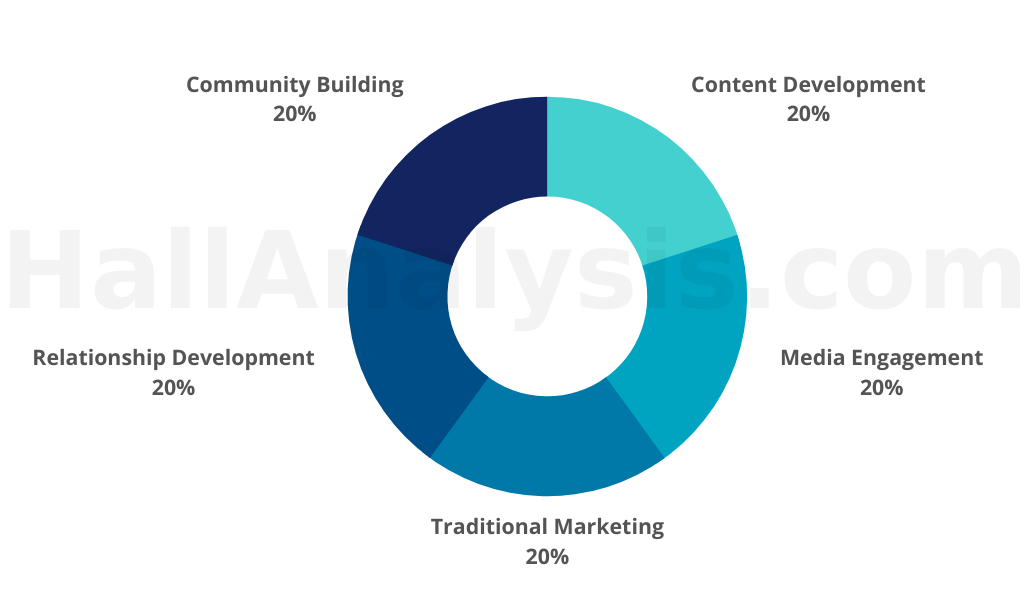
So how does one build as many links as possible while still playing by the rules? Well for each business the strategy will be different. But I always advise in a multi-prong approach that combines content development, media engagement, traditional marketing, relationship development, and community building. There are of course entire industries built around each of these areas, but rarely do they focus on their impact of backlink development. If you can zero in on how to engage each with backlinks in mind, you can grow your backlink count without much effort as you pursue each.
Build The Right Content Stack
At the core of any successful link building campaign the right content and strategy is needed. However, most companies and SEOs tend to try many different things and then focus most of their time and investment into one particular content strategy that works for them. This approach helps save money and resources into something that is sure to work, however it limits your ability to focus on all of the possible link opportunities that content can provide.
To make sure that you are not ignoring any untapped content resources you should utilize a content strategy that focuses on three or four different types of content that are guaranteed to bring links to your site. Understanding how to develop content and promote it on a regular basis can help scale your link building work. My good friend Amanda Milligan from Stacker wrote an excellent blog post about building the right Link-Earning Stack over at MOZ. In her article she describes 4 specific types of content that you should focus on in order to scale your link building strategies.
Go read Amanda’s post now where you’ll learn about these 4 amazing content related link strategies:
If you took the time to read Amanda’s post linked above you may have noticed that in several instances she mentions newsworthy content. Oftentimes this means the type of content that is the result of original research that includes newsworthy data or information that the media would likely talk about. I’ve seen examples of law firms creating informal research projects based on public data and publishing their findings on their blog. One example I can remember specifically was the location of past DUI traffic stops in a particular state. By analyzing this data they were able to predict the most likely locations for DUI traffic stops in the state. Which garnered lots of attention from local media outlets as well as lots of social media exposure.
This type of content development can be a very valuable tool to build links, however another important aspect of media engagement is to simply do newsworthy things. Essentially instead of focusing purely on developing content that the media would like to link to, your business should also focus on doing things that the media would like to talk about. Well-established brands will find this process easier, however smaller businesses can still execute this same strategy in their own way. For example, my barber used to give free haircuts to homeless people before a job interview. This type of public service garnered the attention of many local media outlets as well attention on social media. He did not have a website at the time, however if he had I would have advised that he mention it whenever he spoke to a reporter or members of the community.
Tying any public exposure back to your website will help build links through the media and other opportunities that may present themselves during a spike in public attention. For examples of what would work for your business, head over to Google News and do a search for the type of business you are to get a list of stories that you can draw inspiration, from. Here’s an example for an exterminator. To utilize this strategy effectively you may want to consider working with a public relations firm and mention that you would like to promote your website along with your company.
Integrate Link Building Into Other Marketing Channels
If you are reading this article it likely means that you are interested in SEO as a marketing channel. However, hopefully you are also focused on other marketing channels including non-digital. Whatever the case maybe you should try to incorporate link building into every aspect of your marketing strategy. This means having links top of mind when considering all aspects of marketing. Essentially the way this works is considering promoting your website along the same methods and strategies that you use to promote the business as a whole.
For example broadcast media such as television and radio commercials should include mentions of your website when appropriate. If you are buying advertising within print media including your website URL is also a critical tactic for link exposure. Even incorporating your domain name into outside advertising options can increase link building as well. The link building process in this regard is not as direct and maybe difficult to track because the link will likely be coming through secondary sources that are not related or connected to the original outlet. However any increased exposure of any kind to your domain name or web address should increase the likelihood of link development.
To get the best traction from this approach, consider giving the audience a reason to visit the web site, such as: “Visit our website for more coupons” or “Signup for early access!” This will imprint the web site’s name into the audience and increase the “linkability”.
Leverage Relationships
Every human being that engages with your business in any way is a potential link conduit. When it comes to relationships you can think of them as existing relationships and new relationships you haven’t built yet. Understanding how people’s relationships and connection are structured with your company will help better understand their ability to link to you. It may be helpful to scale this tactic by grouping people into several categories.
Human Link Mapping
Category
Relationship
Link Opportunity
Customers
Buys our products.
Happy customers can potentially review our products as UGC or content for their own sites.
Suppliers
We buy their raw materials for our product manufacturing.
We volunteer to be the subject of a case study or provide testimonials for their marketing use.
Employees
Work for us.
Some are engaged in professional organizations that might list their employer. Others should be recognized in the media for extraordinary service.
The above link map is an example of how to uncover hidden link opportunities found within your business’ existing human network. Of course every company will have a different set of categories and their link map will look different because of that, but going through the process of mapping out the different types of people that your business engages with, their relationship to your company, and the potential link opportunities as a result, can be a very valuable process when developing the types of relationships that will encourage backlink growth for your website.
Build “link worthy relationships”
The chart above will help uncover opportunities from established relationships. However, sometimes the type of business or web site doesn’t allow it to organically form the types of relationships that would normally turn into links. When that is the case you may need to work on establishing these relationships on your own. When working to establish “link worthy relationships” you should focus on:
People that can link directly. Historically, these people have been called the “linkarati” within the SEO community. They are typically, online journalists, bloggers, webmasters, or any type of content creator that can create direct links. You can use tools like MuckRack and BuzzSumo to find bloggers and journalist that have “linking ability”. Then engage them on a regular basis on social media to develop the connection needed to share content and news with them that they might link to. This can be very effective but remember in the long run you will get more out of the relationship if you prioritize them above your own needs. This means asking constantly for a link or coverage will sour the interaction and kill any future link opportunities. Always prioritize the relationship above the links and the links will build themselves.
People that can seed content. Building relationships with people that can link directly is critical but can also be time-consuming and difficult if you are just starting out. Therefore, it may be easier to instead build relationships with people that can help “seed” your content in an effort to raise the visibility of your site to the level of those that can link directly. Essentially this means building relationships with influencers or other high-profile users within a specific community that can share and promote your content within their own communities to the level that those with linking ability find it. Finding these types of influencers can help the “seeding” strategy immensely. We’ll discuss more of that in the next section about building a community, however you can get started now finding the right influencers to help seed your content with tools such as SparkToro or Followerwonk.
One of the most brilliant strategies I’ve seen to build relationships with both of the above groups came from a small public relations firm that mostly focuses on the restaurant industry. This particular PR firm developed a small “foodie” blog that reviews local restaurants, provides gourmet recipes, as well as some interesting niche culinary journalism. Initially when they launched their blog I was a bit skeptical and couldn’t understand why their clients would be satisfied with them simply mentioning them in a blog that they ran themselves. However, later they shared with me their secret strategy at play that allowed for them to develop numerous valuable relationships.
Essentially the way it worked was, they would use their blog as a platform to get access to events and information that would normally be exclusive to the media. They would attend press events, grand openings, and food tastings all as representatives of their publication. They even used the blog on numerous occasions to get press credentials at several private events. While covering these events they were able to connect with journalists and members of the media as their equal and start to develop a relationship that they could leverage later on behalf of their client. This strategy allowed them to get regular press coverage in some of the biggest food and lifestyle publications in the country, and subsequently built lots of links back to their clients.
Their blog itself didn’t build very many links back to their clients, however it did build numerous very powerful relationships that allowed for their clients to get more exposure and more links in the process. This is a great example of the power of content and influence within digital media. While some things at first appear to be rather benign and maybe a waste of time, they can have a serious impact if executed correctly.
Build a Community
Most SEOs know that having a strong well-established brand can have a big impact on your SEO performance. There are many reasons why having a strong brand can help with your SEO. Search engines recognize brands as authoritative and trustworthy sources of information. Well-established brands are more likely to attract backlinks from other websites. For these reasons and more it only makes sense that to do well with SEO (and attract more links) you should also focus considerable time on building a strong brand presence within your community of customers.
Brands that are successful at positioning themselves in the center of engaged online communities can reap the benefits of free exposure and loyal users that can help spread their message and move their strategies forward. Brands that build their own communities can further see benefit by positioning themselves as a source of valuable information and fostering a community that adds value. All of these things can help build backlinks organically with little effort.
There are of course many different types of online communities, and ways to develop each. Justin DiRose, tells us at the Discourse blog that there are 6 different types of online communities. Brand Communities, Support Communities, Learning Communities, Networking Communities, Social Communities, and Fan Communities. Picking which works best for you will depend on a lot of different factors, but if your focus is attracting links, you need to consider the “how and why” users of your community would link to you.
One of my favorite example of online communities at work is a private Facebook group called WP Speed Matters. The group description is simple and reads: “A group of people who are experts in optimizing WordPress for speed. Join if you want to boost your knowledge in speeding up WP and get help from the experts, top plugin/theme developers, and hosting providers”. Originally started by Gijo Varghese, it is an excellent group for web developers, designers, and marketing pros that are focused on building fast WordPress sites. In the group there is always an active discussion going on where users talk about WPO for WordPress or help each other out with technical issues. However, the real genius behind this group is that its founder, Gijo, created it while also developing his own series of premium performance related tools and plugins for WordPress. Now the group has almost 20,000 members that Gijo has instant direct access to on a daily basis, which helps promote new content and organically seeds the link building process.
Almost any brand can replicate what Gijo has done above, if they follow a few key tips:
Pick a non-commercial adjacent topic. Lets say that you are the owner of “Danny’s Dog Beds”. Then a good non-commercial adjacent topic might be “Dog Park – Come Play With Us”.
Learn which social network your audience is most likely using. Some networks are more popular than others with a given topic. Knowing which works best will help you find the one that will have the best impact.
Setup and optimize the group for visibility. Add images, a group description, SEO friendly group name, and pinned posts that give main discussion topics. What will be required for each group will vary with each social network, so it may be helpful to work with a consultant that understands the network well if needed.
Recruit 10 active users. Every online community needs a core group of engaged users to start out with. These users will provide important aspects to the early stages of your community that are needed to help grow the community into an engaging place. It’s important to find ten or so highly active and enthusiastic users that are willing to contribute thoughtful discussion and content to your community in the early stages. This initial engagement will drive visibility within the greater social network and will inspire other users from outside to join and engage as well. Recruiting these initial 10 users may require a bit insensitive to bring them in, but as soon as the community grows and engagement increases they will be hooked on the discussions and socialization like other users in the group.
Engage. Engage. Engage. The more active your group is the more likely it will receive attention from outside the group and the more its users become invested in your brand and content. Making a point to engage those first 10 users daily will be important, and then as the group grows you can scale back to several times a week, and so on as the group takes on a life of its own with new active users contributing new content and discussions on their own.
The goal of this entire process is to develop a group of dedicated users that will help propel your marketing efforts in organic ways such as link building. Back in 2008 Kevin Kelly famously told us that businesses and creators only need 1000 “true fans” online. I think that this concept of having a core group of individuals that will help promote and support your company on the internet is more true now than ever. Engaging your community in a way that fosters the development of these true fans is critical to community building as a link building tactic. After your core base of “true fans” are established, your link building apparatus will become significantly more effective as your content that you share with the community will be seeded, linked to, and shared across the internet almost organically.
Many SEOs have an obsession with high-quality backlinks. One of the biggest problems with quality as a benchmark is that it is inherently subjective and thus hard to measure for both humans and search algorithms. Our best understanding of how search engines might understand quality is through pattern analysis, not simply picking examples out of a dataset. Therefore, a better way to understand backlinks is to judge their relative “authority” with metrics that resemble PageRank. However, focusing too much on authority metrics can limit your scope and be detrimental to getting high quality links. You can get more authoritative and higher quality links if you focus instead on quantity and not get corrupted with social incentives and biases. To best focus on the quantity of links you should implement a multi-prong approach that combines right content stack, doing newsworthy things, integrating link building into other marketing channels, leveraging existing relationships, building new relationships, and fostering an online community.
Hopefully, this has given you a lot to think about. If you have questions, or would like some ideas on how anything mentioned here can be executed for you, contact me today! I’d love to chat.
The covid-19 pandemic has had an incredible influence on all facets of society. However one of the most talked-about and obvious changes has been economic shifts within most countries that have been hit the hardest. While a majority of the news has been focused on the economic downturn in major sectors such as the service industry, little attention has been given to parts of the economy that have accelerated and done better as a result of the covid-19 pandemic.
While it’s hard to find data that shows direct correlations with public health crisis and economic performance, it is obvious based on anecdotal evidence and market trends that the covid-19 pandemic has had an increased demand on SEO and digital marketing in general. Below we can see data from Google Trends that show a dramatic increase and consistent upward trend for the search term SEO beginning after the pandemic started to impact major aspects of society.
It also appears that this increase in interest has resulted in an increase in SEO business as well. Below we can see data from ahrefs that shows an increase in links discovered starting in the summer of 2020. This would coincide perfectly with a normal agency level campaign that takes the first several months to execute and develop strategy and best practices, and then an investment in backlink building usually starts to get crawled and indexed two or three months after. This is likely why we see this increase in links starting in the summer of 2020 after the pandemic was underway and agencies were starting their link building campaigns for new business acquired in the last several months. (However it’s also possible that for some reason ahrefs increased their crawl rate at this time as well, which would account for the increase in data across the board. But I find that unlikely given that the number of domains in the first chart does not increase like the other charts following.)
Also based on a poll of SEO professionals on Twitter there is overwhelming agreement that the pandemic has had an increased demand for SEO.
The pandemic has brought an increased demand in SEO.
How long will this demand be sustained? Can we look forward to continued growth in the years to come? My best guess is that while we may see a slight plateau in the next year with SEO, we will not go back to where things were before the pandemic and in some cases the increase in demand will continue. There has been a large economic shift within our society as a result of the pandemic our economies are becoming more digital and consumers are turning to the internet more and more. All of these are reasons for an increase in SEO.
We use cookies to ensure that we give you the best experience on our website. If you continue to use this site we will assume that you are happy with it.